
 Health Literacy Asia
“Addressing misinformation with empathy and factual clarity is essential to sustaining vaccine confidence across the Americas”— Daniel Salas, Executive Manager, PAHO Special Program for Comprehensive Immunization
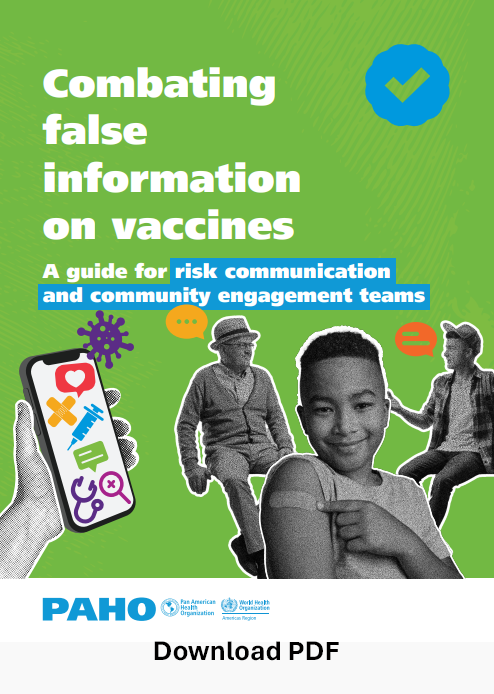
False or misleading information about vaccines spreads faster today than ever before—often more quickly than the truth itself. To help counter this, the Pan American Health Organization (PAHO) has released Combating False Information on Vaccines: A Guide for Health Workers, a new resource designed to help doctors, nurses, and community health professionals respond confidently to vaccine misinformation.
While written for healthcare workers, the guide offers valuable insights for anyone who wants to understand how misinformation spreads—and how to stop it.
Why vaccine misinformation spreads
Misinformation thrives because it plays on emotions, fear, and distrust, not facts.
Social media algorithms amplify dramatic or sensational content, allowing myths to reach millions within hours.
PAHO warns that some groups deliberately exploit misinformation for political or financial gain, making it crucial for health workers—and the public—to become stronger, evidence-based communicators.
How to spot false or misleading information
PAHO’s guide provides simple steps anyone can follow to check if vaccine information is trustworthy:
- Check the source – Look at the website address, author credentials, and publication date.
- Watch for emotional manipulation – Fear-based or conspiracy-driven language is a red flag.
- Look for evidence – Reliable articles cite studies or experts and avoid exaggerated headlines.
Remember: Misinformation often mixes partial truths with falsehoods to appear credible.
Two smart strategies: “Prebunking” and “Debunking”
PAHO outlines two practical ways to fight misinformation before and after it spreads:
-
Prebunking
Prepare people before they encounter false information. Explain how misinformation works and what credible information looks like. -
Debunking
Address myths after they circulate by presenting clear, factual corrections—without repeating the myth in ways that might reinforce it.
Both techniques can be integrated into community talks, social media outreach, and patient discussions.
Health workers: The most trusted messengers
Health professionals are among the public’s most trusted sources of information.
PAHO encourages an empathetic approach: listen first, show respect, and communicate with transparency.
Techniques like motivational interviewing, which focuses on understanding and guiding patient concerns, can help turn vaccine hesitancy into informed confidence.
Health workers are also urged to support one another by sharing accurate resources and modeling positive communication practices.
Beyond myths: Rebuilding trust
Fighting misinformation is about more than correcting myths—it’s about building trust.
This means making vaccination services accessible, being transparent about benefits and risks, and ensuring people feel heard and respected.
“Even individuals who have been vaccinated in the past can be negatively influenced by misinformation,” notes PAHO.
Combating it requires empathy, patience, and clear communication grounded in science.
By equipping health workers with practical tools and examples, Combating False Information on Vaccines offers a roadmap to strengthen community resilience against the “infodemic” and protect the progress made in immunization across the region.
References
- Pan American Health Organization. Combating False Information on Vaccines: A Guide for Health Workers. Washington, D.C.: PAHO; 2025. Available at: https://reliefweb.int/report/world/combating-false-information-vaccines-guide-risk-communication-and-community-engagement-teams . Accessed October 13, 2025.
By Health Literacy Asia


 joeschmitt